More Than Blood: The Teacher Who Raised Legends
The Woman Who Taught the Sky to Wait
Ms. Maria was in her early thirties when she realized her life’s work wouldn’t be found in a textbook. She lived in a cramped, weathered teachers’ dormitory on the edge of a provincial town. Her salary was a joke, her meals were modest, but her spirit was ironclad.
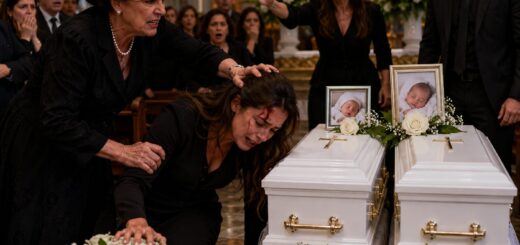
One afternoon, during a tropical downpour that turned the streets into rivers, Maria found two bundles on the steps of a rural health clinic. They were twin boys, huddled under a single, rain-soaked rag. Beside them lay a scrap of paper, the ink bleeding into the pulp: “Please. I have nothing left to give them. Let someone who can, raise them.”
In that moment, Maria didn’t see a burden. She saw a future.
She named them Miguel and Daniel. Her life became a relentless cycle of sacrifice. By day, she taught; by noon, she was boiling huge pots of rice; by evening, she was standing at dusty intersections with the boys, selling lottery tickets just to afford their school supplies.
On nights when the power grid failed, they huddled around a single oil lamp. While other kids played, they studied. Miguel had a mind for the logic of numbers. Daniel was obsessed with the mechanics of the world. “Ma’am,” Daniel once asked, looking at a bird through the window, “how do things so heavy actually stay in the air?” Maria smiled, smoothing his hair. “Because, sweetheart, dreams provide the lift. Physics just handles the rest.”
Decades of “borrowed” textbooks and weekend construction jobs followed. Maria never wore a new dress, but her boys never missed a tuition payment. When they were both accepted into the elite flight academy, Maria cried in the dark—not out of sadness, but because the “lift” she had promised them was finally working.
Fifteen years later.
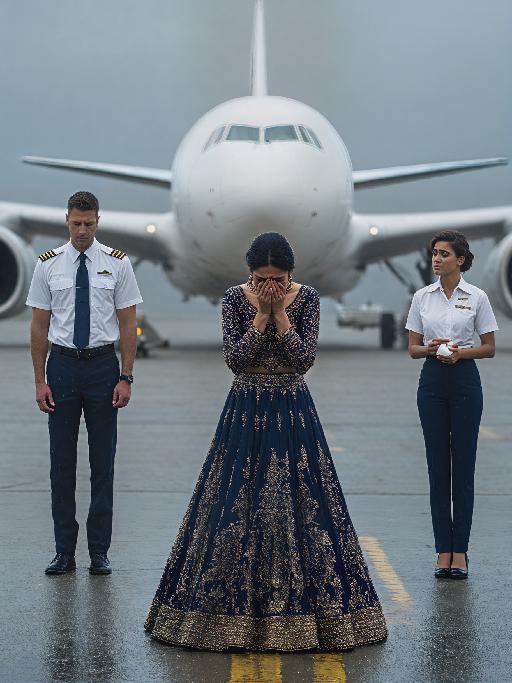
Manila International Airport was a chaotic sea of travelers. Two pilots in crisp, navy uniforms stood at the arrival gate, their presence commanding respect. They were waiting for a small woman with silver hair and hands calloused by years of hard labor.
But before they could reach her, a well-dressed woman stepped out from the crowd. She was the biological mother. She spoke of the “tragedy of poverty” and the “impossible choice” she had made. Then, with a calculated flourish, she placed an envelope on the table. Inside was a check for 10 million pesos—a “reimbursement” for the cost of their upbringing. She wanted her sons back. She wanted the status of being the mother of two pilots.
The terminal seemed to go silent.
Miguel didn’t touch the money. He slid the envelope back across the table with the same precision he used to land a Boeing 747. “You gave us life,” Miguel said, his voice flat and firm. “But you didn’t raise us.”
Daniel stepped forward, his eyes shimmering but his stance steady. “Biology is a fact, but motherhood is an achievement. Ms. Maria didn’t just feed us; she gave us the wings we’re wearing today.”
In front of the stunned crowd, the two pilots turned their backs on the money and the past. They walked to Maria, took her frail hands in theirs, and for the first time, spoke the word she had earned through a thousand rainy nights.
“Mom,” they said in unison. “It’s time to go home.”
As they walked toward the exit, a jet roared overhead, piercing the clouds. Some mothers give birth. Others spend their entire lives building the runway so their children can finally touch the stars.