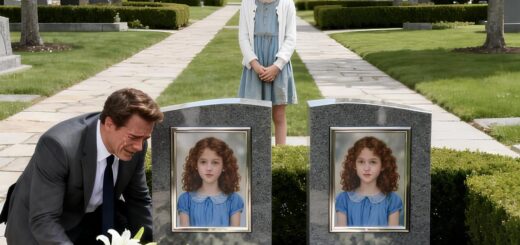
The children left their mother alone in the village and didn’t even come to her funeral. After her death, when the notary opened the will, everyone was shocked by the decision the old woman had made.
The children had long forgotten their mother, who lived alone in a village. They did not call her for months, did not care about her health, and did not even come when she died. A neighbor informed them about the funeral, saying it would take place in two days.
Daughter Anna immediately decided not to go. She had exams, student debts, and no money. She was not going to spend her last funds on travel and the funeral, especially since she did not want to see relatives or listen to reproaches. Her relationship with her mother had long been cold.
The second daughter, Victoria, learned about her mother’s death while abroad. She had just checked into a hotel with a friend and was planning her vacation. Victoria quickly calculated how much the return ticket would cost and how much money she would lose by canceling the trip. The decision seemed obvious — to continue her holiday.
The son, Daniel, learned the news in the morning over breakfast. He listened calmly, without emotion. Formally, he could take a day off work — the reason was valid. But the flight was long, and he no longer felt any connection with his mother. There were no warm feelings left toward her or his sisters.
At the funeral, there were only a few people: neighbors, a few acquaintances, and the deceased woman’s former colleagues. A neighbor stood by the grave with a young woman helping him. Neither Anna, nor Victoria, nor Daniel attended. Someone quietly said that the children had not come at all.
A few days later, all three were summoned to a notary. That was when Victoria decided to fly in and postpone her vacation, Anna suddenly found money, and the son took a day off work. They were sure the mother’s house would be divided equally, as the law provides. But deep inside, there was a growing uneasy feeling that things would not be so simple.
The notary’s office was near the city center. At the entrance, Victoria saw Daniel standing straight with his usual military posture. Anna was there too, looking tense.
The notary began reading the will. Victoria nervously tapped her nails on her phone, Anna could not sit still, and Daniel quietly clenched his fingers.
When the notary finished reading, all three of them nearly turned pale….

The notary announced that the house would be sold, and all the money would be donated to a charity supporting lonely elderly people.
But that was not all.
It was also stated that all financial obligations of the mother were transferred to the children. Loans, debts, and unpaid bills would be divided equally among them. They would receive no inheritance or savings.
Anna was the first to turn pale. Victoria quickly put her phone down, and Daniel slowly straightened up.
The notary then read the mother’s final letter:
“I gave my whole life to them. Especially to my son’s education. These debts are for his studies. Let him deal with them now.”
The room fell silent. They left not only without inheritance, but also with debts — and their own conscience.