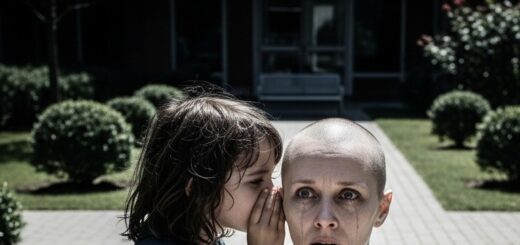
until my sister’s wedding day, I never thought domestic violence could exist inside my own family. I believed it was something that happened to others—never to us.
My name is Elena Ruiz, and until my sister’s wedding day, I never thought domestic violence could exist inside my own family. I believed it was something that happened to others—never to us.
I grew up in Córdoba, in an old house passed down from my grandmother. It wasn’t modern, but it was strong and familiar. I once believed my relationship with my father was just as steady. Javier Ruiz often told me that the house would eventually be mine. I trusted him completely. I cared for him when he was sick, paid for repairs out of my own money, and accepted his promises even though nothing was ever formally written.
Everything changed on the day my younger sister Isabel got married.
The ceremony was small and filled with warmth. Laughter, music, celebration—nothing hinted at what was coming. But during the reception, my father suddenly stepped forward and took the microphone.
With a proud smile and a raised glass, he announced that as a wedding gift, he was giving our family home to my sister and her husband.
For a few seconds, I couldn’t breathe.
Then I stood up.
My voice trembled as I said I did not agree—that the house wasn’t just property, it was part of my life, and it couldn’t simply be given away.
The entire room fell into silence.
I saw something in my father’s expression I had never seen before—pure, uncontrolled anger. He grabbed my arm. Before anyone could intervene, he slammed my head into the wall of the hall.
The impact echoed through the room like a final verdict.
I remember the pain, the metallic taste of blood, and the sound of people screaming. Some guests rushed forward. Others stayed frozen, holding up their phones, recording everything instead of stopping it.
In that moment, I finally understood something painful: fear had been holding our family together for years.
What I didn’t know then was that one of the guests was livestreaming the entire incident.
By the end of the day, the video had spread across the internet. Millions of people—over five million—watched me fall, bleed, and struggle to stay conscious.
As the paramedics carried me into the ambulance, I realized something irreversible had happened. My old life was already gone.
It didn’t just end with the injury. It ended with a choice I should have made long before.

I woke up in the hospital with my head bandaged and my phone overwhelmed with endless notifications. My friend Natalia was the first to tell me: the video had gone viral.
Strangers were messaging me, commenting, asking questions, reacting to something I could barely process.
Doctors said I had a concussion and needed stitches. But the deeper damage wasn’t physical—it was something harder to name.
That same night, my father was arrested. The evidence was undeniable; millions had witnessed it.
My mother never came to see me.
Isabel did. She cried and said she never wanted things to turn out this way. I had no words left. The situation had gone far beyond the house or the argument.
In the days that followed, my life became a topic of public discussion. Lawyers, journalists, and strangers all had opinions. Some called me brave. Others doubted my story.
But as I looked back, I realized the truth: the violence didn’t begin that day—it simply became visible that day.
I decided to press charges, fully aware it would break what remained of my family.
I lost my job for a time. I couldn’t concentrate, and my name was everywhere. But for the first time, my decisions were truly my own.
Therapy became the beginning of rebuilding. I slowly learned that love should never require silence, fear, or suffering.
The house dispute went to court, and the property was frozen until a final ruling. Over time, I stopped seeing it as something I had lost and started seeing it as a symbol of everything I had endured in silence.
When the trial came, I wasn’t afraid—I was exhausted.
In court, my father couldn’t meet my eyes. I spoke clearly, supported by medical reports and the viral footage. I wasn’t asking for revenge. I was asking for justice.
The court issued a restraining order and delivered its decision. It wasn’t perfect, but it was final.
Months later, life slowly began to settle.
I found new work. I moved into a small apartment. I learned that starting over is not failure—it is survival.
The house was eventually sold, and the money divided according to the law. It didn’t make me feel richer. It made me feel free.
My mother still doesn’t speak to me. My relationship with Isabel exists in a fragile, careful way. Some connections can’t be restored—only accepted.
The video still exists online, though it fades with time. I no longer search for it.
I choose not to look back.
I share this story because I know I’m not alone. Violence inside families is often quiet, gradual, and hidden—until it isn’t.
And if you’ve read this far, maybe something in it felt familiar. Sometimes speaking out is the first step toward breaking a silence that was never meant to protect you.