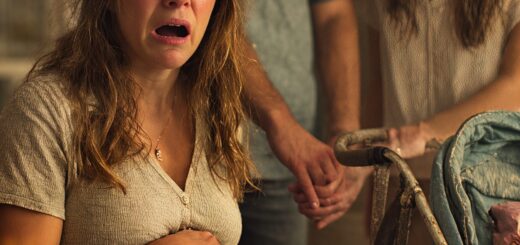
She handed me a plastic zipper bag stuffed with pennies for a $14 pizza and whispered, “I think it should be enough.”
She handed me a plastic zipper bag stuffed with pennies for a $14 pizza and whispered,
“I think it should be enough.”
I stood on her crumbling porch while icy wind slipped straight through my jacket.
The delivery note on the receipt was simple:
Back door. Knock loudly.
It wasn’t a trailer park, but it felt close — one of those tiny houses on the outskirts of town with peeling siding and the look of being forgotten.
There were no lights on.
I knocked.
“Come in!” a thin, fragile voice called out.
I pushed the door open. The air inside felt even colder than the night outside.
An elderly woman sat in a recliner buried under old blankets. No TV. No radio. Just a single lamp glowing weakly in the corner and the sound of her heavy breathing.
She stared at the pizza box like it was treasure.
“I’m sorry it’s so cold,” she said, hands trembling as she reached for the bag beside her. “I try not to turn the heat on until December. I have to save money for my heart medication.”
She handed me the bag. It was heavy with copper coins.
“I counted it twice,” she said, eyes glassy. “Mostly pennies… some nickels I found in the couch. Is it enough?”
The total was $14.50.
I never took the bag.

Instead, I glanced into the kitchen. The refrigerator door hung slightly open.
Inside, there was nothing.
Not messy — empty.
Half a jug of tap water.
A box of baking soda.
A stapled pharmacy bag with prescriptions.
That was all.
She wasn’t ordering pizza out of laziness.
She ordered it because it was the cheapest hot meal that could reach her door — and she didn’t have the strength to cook.
On the dusty mantel, framed photos showed her in a nurse’s uniform from the 1970s.
She had spent forty years caring for others.
Now she sat in the dark choosing between heat, medicine, and food.
I swallowed hard.
“Actually, ma’am,” I said, lying, “we had a system glitch. You’re our 100th customer today. Dinner’s on us.”
She hesitated.
“Are you sure? I don’t want you getting into trouble.”
“I’m the manager,” I lied again. “Keep the change.”
When she opened the box, steam rose into her face. She closed her eyes and inhaled deeply, a tear sliding down her cheek.
I walked back to my car… but I didn’t start the engine.
I texted dispatch: Flat tire. Need 45 minutes.
Then I drove to the supermarket.
I didn’t buy junk.
I bought essentials.
Milk. Eggs. Soft bread. Pull-tab soup cans so she wouldn’t need a can opener. Bananas. Oatmeal. A warm rotisserie chicken.
When I returned, she was already eating her second slice — like she was afraid the food might disappear.
I started unpacking groceries on her table.
She froze. The slice slipped from her hand.
“What… is all this?”
“My grandmother lives alone too,” I told her. “If she ever sits in the dark like this, I hope someone does the same for her.”
She tried to wheel herself closer but couldn’t get past the rug.
So I went to her.
She gripped my hand with surprising strength and pressed it to her forehead, crying.
“I worked forty-five years,” she sobbed. “I did everything right. I don’t understand how life ended up like this.”
I stayed an hour. Sealed drafty windows. Replaced a burned-out lightbulb. Before leaving, I turned the thermostat up to 70°F.
“But the bill…” she whispered.
“Don’t worry about the bill tonight.”
I drove away with less money than I started my shift with.
But here’s the truth:
We live in the richest country in the world.
Billionaires launch rockets into space.
Apps deliver burritos in ten minutes.
And tonight, a retired nurse was ready to eat baking soda for dinner because her medication costs more than her pension.
Check on your neighbors.
Especially the quiet ones.
The ones with the lights off.
Looking away doesn’t make them invisible.
It just makes us blind.