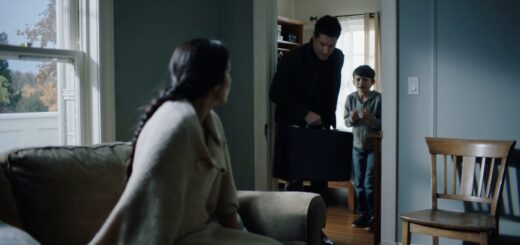
I stopped calling my son three years ago. It was the hardest thing I’ve ever done, but one day he came back with a baby… and the truth, which I wasn’t ready for.
I stopped calling my son three years ago. It was the hardest thing I have ever done.
For months, I was the parent who chased. I sent text messages that stayed on “Read.” I left voicemails that went unanswered. I begged for five minutes of his time, pleading to know why he had cut me out. I was desperate, wondering where I went wrong, replaying every mistake I made since he was a toddler.
I was losing my dignity. I was teaching him that my love was cheap, something he could ignore and trample on.
Then I read something that changed my life:
True love is not forced; it is shown through actions. Sometimes, silence is the loudest way to love.
So I stopped.
I didn’t block him. I didn’t write a nasty post on Facebook about “ungrateful children.” I didn’t badmouth him to the neighbors in our quiet suburb. I simply let go. It wasn’t out of anger. It was out of respect — for him, and for myself.
I realized my job was done. I had raised him. I sat in the bleachers for every Little League game. I worked double shifts at the plant to pay for his college so he wouldn’t drown in student loans. I taught him right from wrong. I gave him values. If those seeds were planted deep enough, they would grow. If not, my tears wouldn’t water them anyway.
I decided to live. I fixed up the old porch. I started volunteering at the local food bank. I found peace in my own routine.
I wanted him to know that if he ever looked back, he wouldn’t see a broken old man waiting by the phone. He would see a father standing tall, at peace with his conscience. I learned that your calm is the greatest lesson you can teach from a distance.
Three Christmases passed. The chair stayed empty. I didn’t carry guilt anymore. I trusted the process. Life has a funny way of teaching people what matters, usually when they are busy making other plans.
Last Tuesday, a car pulled into the driveway. It wasn’t a holiday. It wasn’t a birthday.
My son stepped out. He looked older. Tired. He had a baby carrier in his hand.
He walked up the steps, looking at the porch I had fixed, looking at the peace I had built. He hesitated, perhaps expecting a lecture, or a guilt trip, or the “I told you so” that so many parents keep loaded in the chamber.
I opened the door.
“I didn’t know if you’d want to see me,” he said, his voice cracking.
“I… I just had a son. And I realized… I didn’t know how hard it was. I didn’t know.”
Maturity had finally arrived. He understood.
I didn’t ask for an apology. I didn’t ask where he had been. Genuine love seeks no revenge, only peace.
I just opened the screen door wide and smiled.
“There is always a plate for you here,” I said.
“Come inside.”
He stepped inside slowly, like a boy returning home after breaking a window.
The house smelled the same. Coffee. Wood polish. Quiet memories.
He stood in the hallway, unsure where to put his hands, unsure where he belonged.
I pointed toward the kitchen.
“Sit. You must be tired.”
He placed the baby carrier carefully on the table like it held the entire universe inside. His hands trembled slightly.
“He cries a lot at night,” he admitted.
“I didn’t know how exhausting it could be.”
I poured coffee into the same mug he used years ago. The one with a chipped handle he never wanted to throw away.
“I remember,” I said softly.
“You cried every night for six months.”
He let out a weak laugh, then covered his face with his hands.
“I thought you were controlling me… judging me… trying to run my life.”
“I thought leaving was freedom.”
Silence filled the kitchen, but it wasn’t heavy anymore.
“It was something you had to learn yourself,” I replied.
“Some lessons don’t fit inside advice.”
He nodded slowly.
“I used to think strength meant proving I didn’t need you.”
“But when my son was born… I realized how much I still needed my father.”

The baby stirred and made a tiny sound. Both of us looked at him at the same time.
My son smiled nervously.
“Do you… want to hold him?”
My hands, older and slower now, reached forward.
“Of course.”
The baby wrapped his tiny fingers around mine without hesitation. No resentment. No history. Just trust.
Tears filled my son’s eyes.
“I’m sorry it took me this long,” he whispered.
I shook my head.
“You arrived exactly when you were ready.”
He exhaled like he had been holding his breath for years.
“I thought you’d be angry.”
“I thought you’d remind me how long I stayed away.”
I smiled gently.
“Love doesn’t keep score.”
We sat at the kitchen table — three generations — while the afternoon sun filled the room.
And in that quiet moment, without speeches or blame, a family began again.
“They needed lies to keep themselves going. I needed only the truth to stand.”
Yesterday I came home early from work and heard my mother laughing:
“She still doesn’t know.”
The sound of rubber wheels sliding across parquet floors had been the soundtrack of my life.
A constant, monotonous hum that had followed me since I was eight years old.
Sometimes, in the quiet of the night, I dreamed that I was running.
Cool grass under bare feet. The sharp click of heels as I chased a bus.
The simple, miraculous verticality of standing.
But I always woke the same way—staring at the ceiling, motionless legs under the blanket, my wheelchair beside the bed like a metal guard.
My name is Amelia.
I’m twenty-eight years old, and according to my medical records, I’m a paraplegic due to a spinal cord injury from a childhood car accident.
That day split my life in two.
I stopped being the girl who climbed trees and became “poor Amelia” — the one who needed help with everything.
If I learned anything over those twenty years, it was how to live with guilt.
Not guilt for doing something wrong — guilt for existing.
After the accident, my life became a black hole that swallowed energy, money, and dreams.
My parents, Linda and Michael, were considered saints in our community.
Every Sunday after mass people would approach my mother, touch her arm with sympathetic admiration and say:
“You’re so brave, Linda. God gave you such a heavy trial.”
She would lower her eyes, smile modestly, and squeeze my shoulder.
“This is my daughter. I’ll do anything for her.”
And they did.
Oh, they did.
My father worked overtime in a warehouse to pay for painful and useless therapies that private doctors said were “necessary to maintain muscle tone.”
The feeling never returned.
Then there was Emily, my older sister.
She sacrificed the most.
She had artistic talent. She dreamed of studying in Europe.
But she stayed.
Stayed to help me bathe, take me to appointments, become the permanent shadow of her disabled sister.
“My place is here with you,” she told me when she saw me crying. “Paris can wait.”
I believed them.
I loved them with blind devotion.
I did everything possible not to be a burden. I learned programming at home, found remote work, and recently got a part-time job at a tech company.
I wanted to repay them for everything.
My routine never changed.
Accessible transport picked me up at 8:00. I worked until 14:00 and returned home around 15:00 when the house was usually empty.
But yesterday the routine broke.
At noon the office system crashed and we were sent home. I told no one. I wanted to surprise them.
I arrived at 12:30.
My parents’ car was outside. I thought they came home for lunch.
I entered quietly. My wheels barely whispered.
I was about to call out, “I’m home!” when laughter stopped me.
It wasn’t my mother’s soft church laugh.
It was loud. Crude. Almost vulgar.
From the kitchen.
“Michael, pour me another!” she said joyfully.
“It’s only noon,” my father laughed. “But you’re right. This is worth celebrating. The check came this morning.”
The check.
“Fifty thousand dollars,” Emily added. “Net.”
I froze.
“Incredible the insurance still pays without asking questions,” my father said. “For the ‘great family tragedy.’”
Glasses clinked.
“What if the new doctor suspects something?” Emily asked.
My mother laughed again — the kind of laugh that froze my blood.
“As long as Amelia takes her ‘vitamins,’ her legs will stay as weak as boiled noodles. She’s so naive… she’ll believe anything if we say it’s for her own good.”
The world stopped.
“If she knew she could have walked ten years ago…” my mother added.
The kitchen exploded with laughter.
They had been drugging me. For years.
Muscle relaxants. Sedatives. Criminal doses.
I escaped, called a taxi, and went to a hospital far from their doctors.
“I think I’m being poisoned,” I told the nurse.
Hours later the doctor confirmed the unimaginable.
“Your spinal cord isn’t severed. With rehabilitation, you can walk.”
I didn’t cry from relief.
I cried from loss.
That night something stronger than pain was born.
I went home.
I didn’t take the pills.
“I dreamed I could walk,” I told them. “That all this is a lie.”
My father offered capsules.
“No.”
I stood.
Pain tore through me like thousands of needles — but I stood.
“I gave you a double dose this morning!” my mother screamed.
“I know,” I said. “And everyone else knows too.”
I showed them my phone.
“I was live streaming.”
Ten minutes later, the police arrived.
Seeing them in handcuffs was terrifying.
And freeing.
A year passed.
Walking hurts. Everything hurts.
But every step is mine.
They wanted me to stay sitting forever.
They didn’t know even with broken legs I was stronger than them.
Because they needed lies to keep themselves going.
And the truth was enough to make me stand.
Years later, my son stood at my door holding a baby.
“I know,” I said.
He wiped his face and whispered, “I abandoned you.”
And that — more than any apology — was the beginning of repair.
We didn’t fix three years in one afternoon.
That’s not how real life works.
But we stopped lying.
Real love isn’t helpless.
Real love has a spine.
Families don’t fall apart from one explosion.
They fall apart from small silences people call “peace.”
And they don’t come back together from perfect apologies.
They come back together when someone finally says the bravest sentence there is:
“I hurt you… and I’m done pretending I didn’t.”